The LA County Sheriff’s Department could be forced to identify deputy gangs in the ranks as soon as next year
Los Angeles County Supervisor Holly Mitchell has written a motion directing the Los Angeles County Sheriff’s Department to identify the deputy gangs within its ranks.
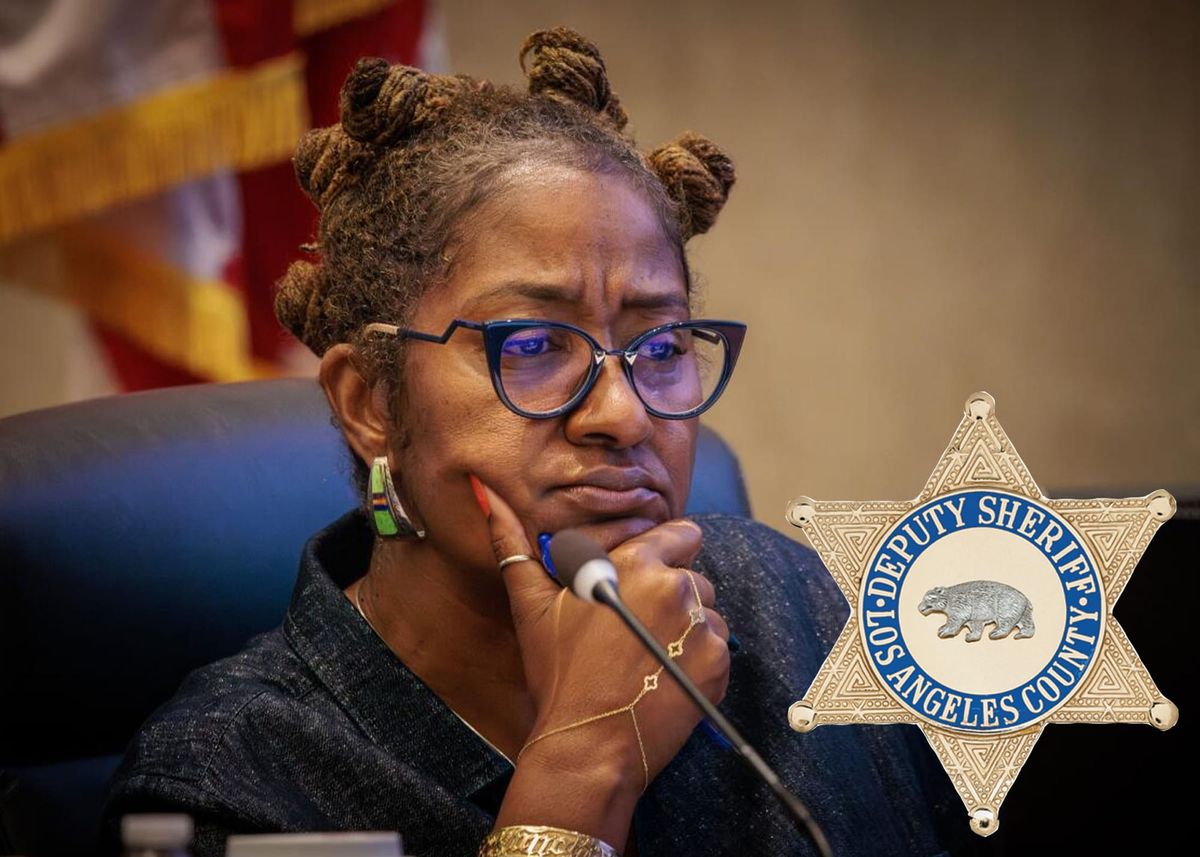
Los Angeles County Supervisor Holly Mitchell has written a motion directing the Los Angeles County Sheriff’s Department to identify the deputy gangs within its ranks.
Los Angeles County Supervisors Holly Mitchell has written a motion directing the Los Angeles County Sheriff’s Department to identify the deputy gangs within its ranks.
If passed, the motion would direct Los Angeles County Sheriff Robert Luna to work with the Sheriff Civilian Oversight Commission (COC), the Office of Inspector General (OIG) and Los Angeles County Counsel to create a framework and implementation plan to identify and name deputy gangs within the sheriff’s department. Both Luna and County Counsel would also create a confidential memo that details the deputy gangs identified by the sheriff’s department, pending administrative investigations, and to disclose whether investigations have included deputies to show any tattoos on the arms and legs.
The motion would have the county attorneys to work the OIG and COC to report on the feasibility of having an entity outside of the sheriff’s department to undergo an investigation into deputy gangs. The COC retained a Special Counsel to investigate deputy gangs in 2022 and held a series of hearings.
Mitchell said in an email that the motion is key to “closing the gap between rumored and alleged gangs and those that are confirmed and documented, so that the County has a consistent, systemwide approach to identifying and responding to all forms of gangs.”
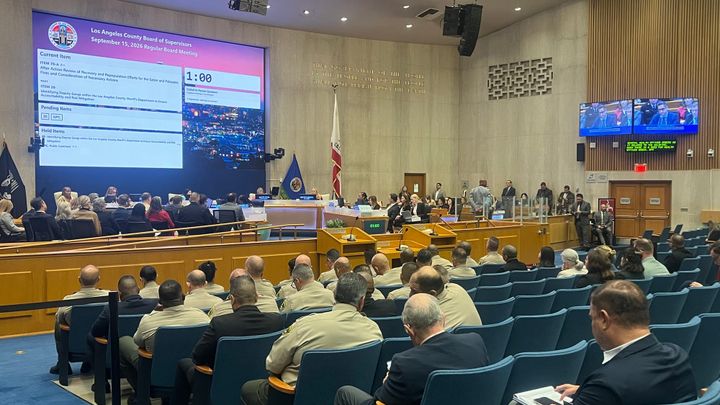
The motion was presented Wednesday at a Public Safety Cluster meeting. Los Angeles County Cluster meetings are held to discuss upcoming items on the agenda of Board of Supervisors meetings. Members of families who have endured the violence of deputy gang joined the meeting to voice their support of the motion.
Vanessa Perez, whose son Joseph was beaten my members of the Industry Indians deputy gang in 2020, said lamented the lack of action on deputy gangs in a public comment. “I strongly urge the rest of the district to move forward with this motion so that what happened to Joseph...doesn’t happen to anyone else.”
Hans Johnson, who is chair of the COC, said in a telephone interview that the resolution had a lot of common sense. He remained critical of the Board of Supervisors inaction on County Counsel repeatedly allowing laws regarding oversight of the sheriff’s department to go unenforced. A six year old law granting the COC subpoena power has still not been enforced, despite a March 2026 court of appeals ruling affirming that authority. State law in AB 847, which became effective January 1, 2026, further enshrines subpoena power for oversight bodies.
“There needs to be a lot more directing of County Counsel, including away from its conflicted attempts to claim uniform representation of the sheriff and of the civilian oversight commission when there is such documented status of its conflicted nature and its collusive obstruction of oversight,” Johnson said.
The COC and County Counsel have developed a tense relationship over the past six years. In 2019, the county lawyers argued that deputy gangs were protected under the First Amendment. In 2023, the COC’s special counsel found that county counsel “has not provided meaningful assistance” in eliminating the gangs. Last year, then-COC chair Sean Kennedy resigned after county counsel threatened to take action against him in state court if filed a brief on the commission’s behalf. During a meeting last month, it was revealed that county lawyers had cancelled subpoenas issued by the COC to the sheriff’s department.
The subpoenas sought the records pertaining to the shooting of Andres Guardado, the arrest and beating of Emmett Brock, a 23-year-old transgender teacher and he beating of Joseph Perez, a 22-year-old bipolar and schizophrenic man.
Each of these incidents involve allegations of deputy gangs. Deputies Christopher Hernandez and Miguel Vega, who shot Guardado, were identified as prospects for the Executioners deputy gang by a fellow deputy in a deposition. A year after the Perez’s beating, the several of the deputies assaulted a group of teenagers at a bowling alley in Montclair. During the sheriff’s department’s investigation into the bowling alley incident, four of the deputies admitted to being part of the Industry Indians deputy gang. Brock was beaten by a deputy assigned to the Norwalk station. Following Brock’s arrest, the COC identified a deputy gang based out of the facility.
Johnson said that involving County counsel in reining in deputy gangs “is like counting on the fox to patrol or take care of the hen house.” Johnson, like other commissioners, has advocated for the commission to have its own independent counsel. The sentiment is shared by other accountability agencies. The Los Angeles County Civil Grand Jury questioned County Counsel’s ability to represent the “public interest” while simultaneously representing the COC, the Board of Supervisors, the sheriff’s Department in it’s 2025-2026 final report.
In response to an inquiry about whether she believes the COC needs it’s own attorneys, Mitchell wrote in an email: “Fair question and one that deserves a thoughtful review of the options, including the legal, operational, and fiscal implications, before taking a position on one approach over another.”
The motion also prompts agencies tasked with furnishing oversight processes to do some self-reflection. County Counsel is instructed to report back on its role in supporting the County’s effort to eradicate deputy gangs. The sheriff’s department’s Office of Constitutional Policing is told to describe its role in investigating deputy gangs. The OIG stated in a recent report that while the LASD had conducted large-scale investigations into employees engaging with the gangs, the LASD had not identified any of the groups.
The motion instructs the Sheriff, County Counsel, OIG and COC to establish criteria for identifying deputy gangs based on “patterns of conduct, shared identifiers, logos and other evidence.” The Sheriff is directed to develop a process to publicly identify, name and report on” deputy gangs that are revealed during internal investigations, which currently not required by state or county law, along with a publicly accessible system to report deputy gang activity.
Mitchell’s motion cites numerous reports and studies that have documented the existence of deputy gangs, including a 2021 report from Loyola Law School, the 2012 Citizen’s Commission on Jail Violence and the 1992 Kolts Report. Also included is “A Tradition of Violence”, my original ground-breaking reporting documenting the history of deputy gangs inside of the sheriff’s department.
Twenty-three deputy gangs are named in the motion:
- Banditos
- Buffalo Soldiers
- Cavemen
- Compton Executioners
- Cowboys
- Ghetto Birds
- Gladiators
- Grim Reapers
- Industry Indians
- IPA
- Jump Out Boys
- Little Devils
- Little Red Devils
- Lomita Lizards
- Lynwood Vikings
- Pirates
- Posse
- Rattlesnakes
- Regulators
- Spartans
- Tasmanian Devils
- The Leafs
- 4000 Boys
- 3000 Boys
- 2000 Boys
- Temple Station V-Boys
- Wayside Whities
The Chief Executive Office and County Counsel are instructed to work together to identify measures to reduce the amount of money the sheriff’s department has generated in settlements. Both agencies would work with OIG and report back on options to enforce the directives of the motion.
The Sheriff is also told to coordinate with the OIG and the Sybil Brand Commission, which monitors county jails, to review all patrol stations and facilities and report on visible symbols and logos within them, as well as the deputy gangs operating inside. The motion includes direction to create a department-wide ban on racist iconography like the Fort Apache logo, a mainstay at the East LA station. The symbol, which depicts a police riot helmet over a boot within a circle of mottos reading “siempre una patada en los pantalones,” which translates to “always a kick in the pants.” The name of the insignia references a 1948 John Ford western of the same name centered on a remote U.S. cavalry outpost surrounded by indigenous people. The white officers refer to them as “savages.”
Read the motion in full below.