I wrote the history of LASD gangs. Then the sheriff’s department started surveilling me
The LA Sheriff’s Department sent over 800 pages of emails in 7 months about me.
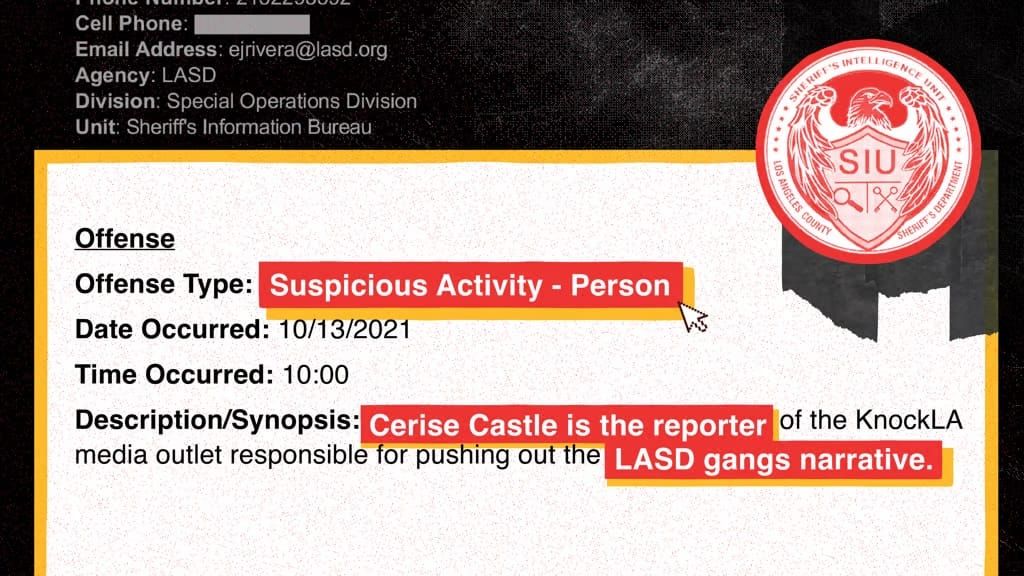
The LA Sheriff’s Department sent over 800 pages of emails in 7 months about me.
This story was originally published by Los Angeles Public Press.
In March of 2021, I published a 15 part series detailing the history of deputy gangs inside of the Los Angeles County Sheriff’s Department (LASD).
Email records released by LASD reveal that my work immediately attracted the attention of dozens of department personnel, and triggered direct surveillance by the sheriff’s department of at least one activist promoting my work.
Those emails stem from a request I made in October of 2021, when I requested electronic records of any communications made by LASD that contained my name. The department denied my initial request, which prompted me to sue the sheriff’s department in civil court for the records. After nearly two years, LASD opted to settle the matter and turn over the records.
More than 50 members of the sheriff’s department sent more than 800 pages of emails about me in the course of just 7 months.
Since reporting on deputy gangs, I have received numerous personal threats of death and rape. Other threats have been directed at my family and loved ones. These threats have arrived via direct message on social media, email, and anonymous texts. I have been pulled over while reporting on the sheriff’s department. I have seen patrol vehicles stationed outside of my house.
These emails confirm LASD monitored me, a reporter performing her work, protected by the First Amendment of the US Constitution, as well as other people they consider to be in my orbit. It’s not clear the extent of which this is still happening. I have filed similar requests to the original filed in 2021, but have not received any records.
Surveillance begins
The first email in the packet I received was generated via a request for comment I made on March 16th, 2021, following up on a previous request for comment for my then-upcoming series on deputy gangs. Although the department never responded to my request, deputy Abe Bedoyan, then of the Sheriff’s Information Bureau, forwarded my email on to several upper level personnel 13 minutes after it was received. In his message, Bedoyan wrote that he knows “below allegations are currently being investigated, but I wanted to forward this for you.”
Recipients included then-captain Jose G. Mendoza, an alleged member of the Banditos deputy gang. Mendoza has since been promoted to chief.
Five days later, on March 21st, 2021, the first three parts of the series were published. The following day, online chatter about the reporting on Twitter/X caught the attention of Tracy Stanfield, then a crime analyst with the sheriff’s department, who flagged and sent the articles to former deputy Carrie Robles-Plascencia, an alleged associate of the Banditos deputy gang.
According to a job posting for the position, a crime analyst “analyzes, prepares reports, and disseminates technical information and data relevant to actual and anticipated criminal activity to operational personnel to increase the effectiveness of patrol deployment, crime prevention, and apprehension of suspects.”
The Sheriff’s Department declined to comment on how Stanfield came to the conclusion that doing work as a reporter is in line with “criminal activity.” Stanfield has since retired, according to LASD, and did not respond to comment.
Two days later, crime analyst Kimberly Dunn of the Records and Identification Bureau emailed a team of crime analysts working within the Sheriff’s Information Bureau with instructions to “keep an eye” on me.
“Freelance journalist Cerise Castle is currently working on a series of articles that started being released yesterday. The project is called “A Tradition of Violence: The History of Deputy Gangs in the Los Angeles County Sheriff’s Department,” she wrote. “Just something to keep an eye on – to monitor what else she posts as part of this project, and for potential doxing purposes, as well.”
In response to the findings of this story, the Sheriff’s Department said in a statement that “we are not monitoring your social media accounts. Since taking office Sheriff Luna has expressed the importance of transparency and the freedom of the press.”
Yet in that same statement, they also said that “in order for us to best serve our community, our employees read news articles and social media posts from various sources. The Department is interested in news coverage from local and national media outlets that cover LASD and current events that may impact our community and organization. We also take an interest in elected officials and numerous community organizations.”
Dunn’s email is the first of a series of communications where the sheriff’s department begins to circulate my personal information — including photos and social media profiles, as well as addresses and phone numbers of people LASD personnel believe to be connected to me — amongst the department.
An attack on press freedom
The department’s surveillance actions were condemned by several press advocates I contacted about this story.
“It creates a significant chill in the fact that journalists should be able to do their jobs without fear that they’re going to be targets, or potential targets, of law enforcement retaliation,” said David Loy, legal director of the First Amendment Coalition. “I just can’t fathom any legitimate reason to maintain that kind of intelligence file on a journalist.”
Ashanti Blaize-Hopkins, President of the Society for Professional Journalists, said in a statement: “It is not only disturbing, but grossly inappropriate for any law enforcement agency to surveil a journalist who is not suspected of committing, nor has committed a crime. The job of a journalist is to hold the powerful to account and that includes law enforcement agencies. Any tactics used by any government agency to intimidate or dissuade a journalist from investigating a story is absolutely unacceptable. These actions can cause a chilling effect that ultimately leaves the public less informed.”
“Journalism is not a crime. But over the last few years, we’ve seen LASD personnel repeatedly retaliate against members of the press just for doing their job. There’s been a pattern by the department of trying to frame innocent journalists as criminals, from freelancers to staff of major outlets. Related legal settlements (nearing seven figures out of taxpayer pockets) and other court records invariably show LASD failing to abide by their own Mission Statement, Creed, and Core Values,” said Adam Rose, the secretary and press rights chair of the Los Angeles Press Club. “Concerns about LASD personnel targeting Cerise Castle must be taken seriously in and of themselves, and also in this larger context. We’ve also heard previous LASD personnel openly make inappropriate comments about her, though never heard an apology. It’s the job of journalists to monitor the government — not the other way around.”
Viktorya Vilk, director for digital safety and free expression at PEN America told LA Public Press that “journalists need to be able to investigate allegations of wrongdoing by law enforcement without being subjected to surveillance and intimidation… The LA Sheriff’s Department needs to respect that and immediately cease surveilling reporters doing their jobs. They also need to explain why they appear to have treated Castle not like a journalist, but like the subject of a criminal investigation.”
“We are deeply concerned by the Los Angeles County Sheriff’s Department’s surveillance of journalist Cerise Castle. Labeling her as ‘Suspicious Activity’ and tracking her social media, which extends to those promoting her work, is a blatant violation of press freedom and privacy rights,” said Inge Snip, senior editor at the Women Press Freedom newsroom, an initiative by the Coalition For Women In Journalism. “This kind of intimidation tactic creates a chilling effect, discouraging critical reporting and eroding public trust in law enforcement,”
“Retaliation for reporting in any form — including surveillance of a journalist and the gathering, and potential exposure, of private information — is an unacceptable response to a journalist simply doing their job,” the International Women’s Media Foundation said after learning of details released through the civil lawsuit. “An essential role of journalism is to hold power to account through investigation and accountability. Equating working journalists to suspicious persons is a dangerous example, and a violation of press freedom.”
Peter Eliasberg, chief counsel/Manheim Family attorney for First Amendment Rights at the ACLU of Southern California agreed. “The sheriff’s department should not be engaged in doing surveillance, keeping files, and keeping dossiers based on what is clearly First Amendment protected activity,” he said.
“Equally troubling is the fact that the sheriff’s department is constantly claiming poverty – they don’t have enough resources, they need more people – and yet they can invest resources, compiling dossiers about journalists,” Eliasberg said. “I would say it is impossible to see any legitimate basis to do this. I would hope that the Board of Supervisors would look with a very jaundiced eye when the sheriff’s department says we need more resources and ask hard questions about why they’re spending resources doing this kind of surveillance of journalists.”
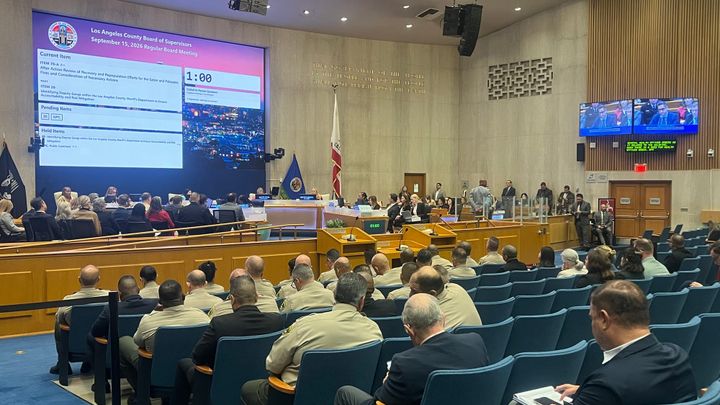
The office of Los Angeles County Supervisor Lindsay Horvath said in a statement that she “does not condone monitoring journalists”. The office of Supervisor Kathryn Barger said that she “supports freedom of the press and its constitutional rights. She is not aware of LASD monitoring any members of the press under Sheriff Luna’s leadership.”
Supervisors Hahn, Mitchell and Solis did not respond to a request for comment.
I had suspected that the sheriff’s department had been watching me before I received the emails confirming it. Since reporting on the deputy gangs, I have noticed different department members consistently watching my Instagram story, including LASD’s official account. I’ve seen patrol vehicles parked outside of my apartment, despite the fact that I live in the city of Los Angeles, which is outside of the sheriff’s department’s jurisdiction.
Instances like these have led to my making major adjustments to the way I live my life. I don’t identify my friends and loved ones publicly. I avoid publicly announcing where I will be at any given time. When I meet new people, I caution them that getting close to me may mean that they will be watched, too.
I’ve made these adjustments without thinking too deeply about it, in an almost robotic like way. It was only when I drew near completing this reporting that I began to realize that all of this might have been traumatic. It took me nearly a year to write this story, which is the slowest I have ever worked on a reported piece. It took a conversation with a relative to make me consider that learning this information may have had an impact on my mental health.
I’m disturbed by what I have learned in these documents, and fear for what it means for other reporters who want to do accountability reporting on policing agencies.
Read more: How LASD surveilled me, a journalist, after I started reporting on deputy gangs.