Skepticism meets LA Sheriff Luna’s deputy gang ban
Advocates and watchdogs question if the policy change will be enforced.
Advocates and watchdogs question if the policy change will be enforced.
This story was originally published by Los Angeles Public Press.
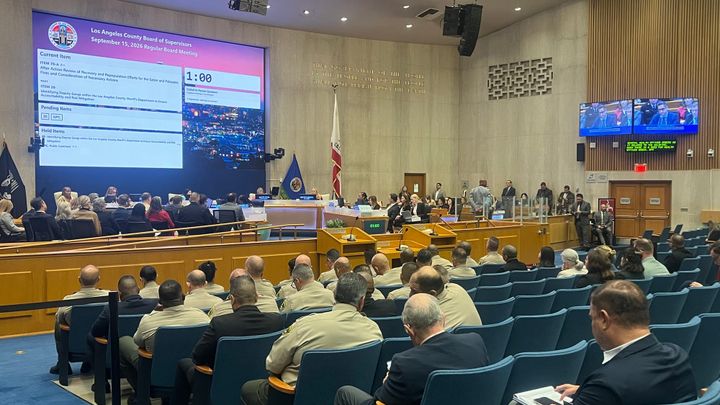
Beginning October 18, the Los Angeles County Sheriff’s Department will officially ban employees from joining or participating in a law enforcement gang. The move comes over two years after state law required all policing agencies in California to adopt such a policy.
This makes participation in a law enforcement gang subject to disciplinary action, possibly including termination. Violations will result in notification to the California Commission on Peace Officer Standards and Training (POST), the state agency that licenses police officers, which can result in the suspension or revocation of an officer’s certification. The policy also requires department members to participate in investigations of prohibited activity.
But members of community groups organizing around reform in LASD expressed skepticism over the new policy, and questioned whether something so simple as a policy change can meaningfully change the culture of law-enforcement.
“Just because you acknowledge that something is there does not mean that it will be actually addressed,” said Raquel Derfler, co-chair of Cancel the Contract Antelope Valley.
She credits LA residents with forcing the department to admit the deputy gang issue was real, and required immediate attention. But she isn’t confident the new policy will translate to action from LASD. “Just because there’s a policy, we don’t have assurances that [deputy gangs] will be eradicated,” said Derfler.
“These officers should be charged with something [for] operating under a code of a tattoo,” said Helen Jones, a member of the Check the Sheriff coalition.
Jones’ son, John Horton, was killed inside of Men’s Central Jail in 2009 and last seen in the company of alleged deputy gang members. “I just wish they still would do something about the ones that got away with killing our community members,” said Jones.
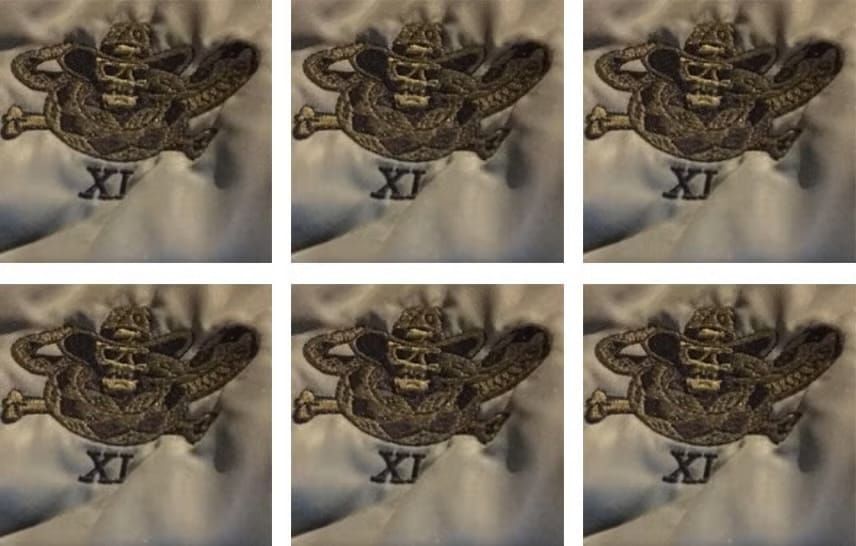
Law enforcement gangs are illegal under California state law. They are defined in Penal Code Section 13670(a)(2) as a group of peace officers who associate with an identifying symbol, matching tattoos, and who persistently engage in things like unlawful detention, making false reports, harassing or committing civil rights violations while on-duty. Membership in hate groups — defined as an organization that supports, advocates for, threatens, or practices genocide or the commission of hate crimes — is also forbidden.
“Our employees are dedicated professionals who maintain the highest standards of integrity and service,” Sheriff Robert Luna said in a statement emailed to Los Angeles Public Press. “This long-standing issue must be addressed appropriately to maintain the community’s trust in us. The tireless efforts of our team to move the culture forward, strengthen our reputation, and eliminate any lingering shadows of mistrust are crucial to our public safety mission.”
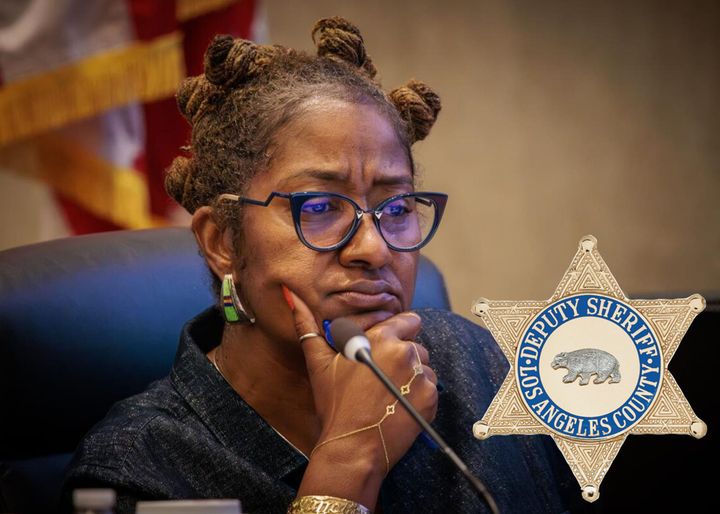
Luna ran on a promise to eradicate deputy gangs. Yet during his tenure, he has promoted at least two people with ties to them since taking office. Undersheriff April Tardy, who is second in command of the department, confirmed in an interview she has a tattoo on her ankle that is associated with a group known as “Temple 5” or the “V Boys”. Jose Mendoza, who was recently promoted to the rank of chief, acknowledged in his interview process for the position that he has a tattoo signifying membership in the Banditos deputy gang, according to the department.
Luna said in his statement that having one of these tattoos was “not an automatic disqualification” for a promotion, and that the decision to promote department members is “based on merit and aligned with organizational values and goals.”
“The culture is changing, people are removing and covering up tattoos,” Luna said.
In announcing the new policy, LASD says that it worked with its oversight bodies and engaged in a meet and confer process with its labor organizations to create this new policy. It’s been touted by unions representing sworn LASD personnel.
“This policy enables the Sheriff’s Department to address staff who do not meet the expected standards of conduct, while safeguarding the rights that are afforded to all workers in this country,” Richard Pippin, president of the Association of Los Angeles Deputy Sheriffs (ALADS), told the Los Angeles Times. “Perhaps the ‘defund the police’ crowd won’t be satisfied, but they never will be, shy of the complete end of any kind of effective policing.”
But those charged with watching over the sheriff’s department have been more critical.
“The new policy leaves implementation and rigorous accountability [for] it still to be achieved,” Hans Johnson, a commissioner for the Sheriff Civilian Oversight Commission told LA Public Press.
In February 2023, the commission issued a report on deputy gangs that included recommendations to eliminate them.
“By my count, the new policy fulfills 6 of the 24 recommendations in the COC report about eradicating deputy gangs,” Johnson said.
In his estimation, the department has fulfilled the recommendations of seeing the sheriff articulate a vision and objectives of addressing deputy gangs while seeking the support of deputy unions, adopting a policy prohibiting deputy gangs, and investigating violations of that policy.
“That shows some progress. It also shows the tenacity required to finish the job,” Johnson said.
Los Angeles County Inspector General Max Huntsman pointed out that the new policy does nothing more than what was required by law two years ago.
“It’s hard to understand why we have waited this long for this policy. I am not optimistic that it will be enthusiastically enforced, nor am I optimistic that the sheriff’s department will start obeying the oversight laws and county ordinances that require them to be open and transparent,” Huntsman said
Huntsman added that his office requested to monitor the meet and confer meetings between the department and the deputy unions regarding the policy, and was denied.
“This whole process has been a continuation of the code of silence of the sheriff’s department that they’ve had in place for 50 years,” he said.
Currently, the California Court of Appeals is reviewing a lawsuit from ALADS seeking to prevent 35 members of the department suspected of being deputy gang members from sitting for questions, showing their tattoos, and giving up the names of any others with similar ink.
This is not the first policy the sheriff’s department has adopted related to deputy gangs. In February of 2020, former Sheriff Alex Villanueva introduced a policy prohibiting participation in any “clique or subgroup that promotes conduct that violates the rights of other employees or members of the public.”
Researchers at Rand Corporation studied deputy gangs in 2021, and wrote in a subsequent report that the department could improve its policy by specifying what was prohibited and requiring deputies to disclose membership.
Deputies who spoke with Los Angeles Public Press anonymously for fear of retaliation said the new policy was a “joke”.